How Jensen Beach Feeds America

HHLOGOsmall.png

In November 2013 SNAP Benefits were cut for all Americans. As expected, this decrease in benefits has caused “hardship” and “food insecurity.”

This affects 23 million households (22 million children) in the United States, which fall into these two circumstances. Approximately 10 million of the children already live in “deep poverty,” due to family income below half of the poverty line. 9 million others are disabled or elderly.

JC's Soup Kitchen

JC's Soup Kitchen

Food Stamps are also known as SUPPLEMENTAL NUTRITION ASSISTANCE PROGRAM (SNAP).

There are 250+ food banks in the nation that distribute food to nearly 50,000 local feeding programs in communities across the U.S., including soup kitchens and food pantries. (Sodexho Foundation)

Traditionally, the hungry have been helped by the church.  Soup kitchens, since times of antiquity, have been operated by churches.  Most still are today.

Florida, a state hard hit in the economic crisis has 3,548,465 on SNAP.  November’s SNAP cut has affected an estimated 3,552,000 in the state. That is 18% of the state’s population.

JC's Soup Kitchen

JC's Soup Kitchen

In Martin County, 59% of single mothers live in poverty, 29% of the children also do, and 5% of those over age 65 as well (2009 Census).

JC's Soup Kitchen

JC's Soup Kitchen

In neighboring St. Lucie County, the poverty rate is 20.3% for all ages, but climbs to 31.7% for children under age 18. (State of Florida 2011)

In Martin County, Florida, there are eight soup kitchens. Only one soup kitchen has a few toiletries available.  Another hands out day old baked goods from Publix supermarkets.    In Jensen Beach, Florida, within Martin County, there are four food pantries.  Every single establishment is run by a church.
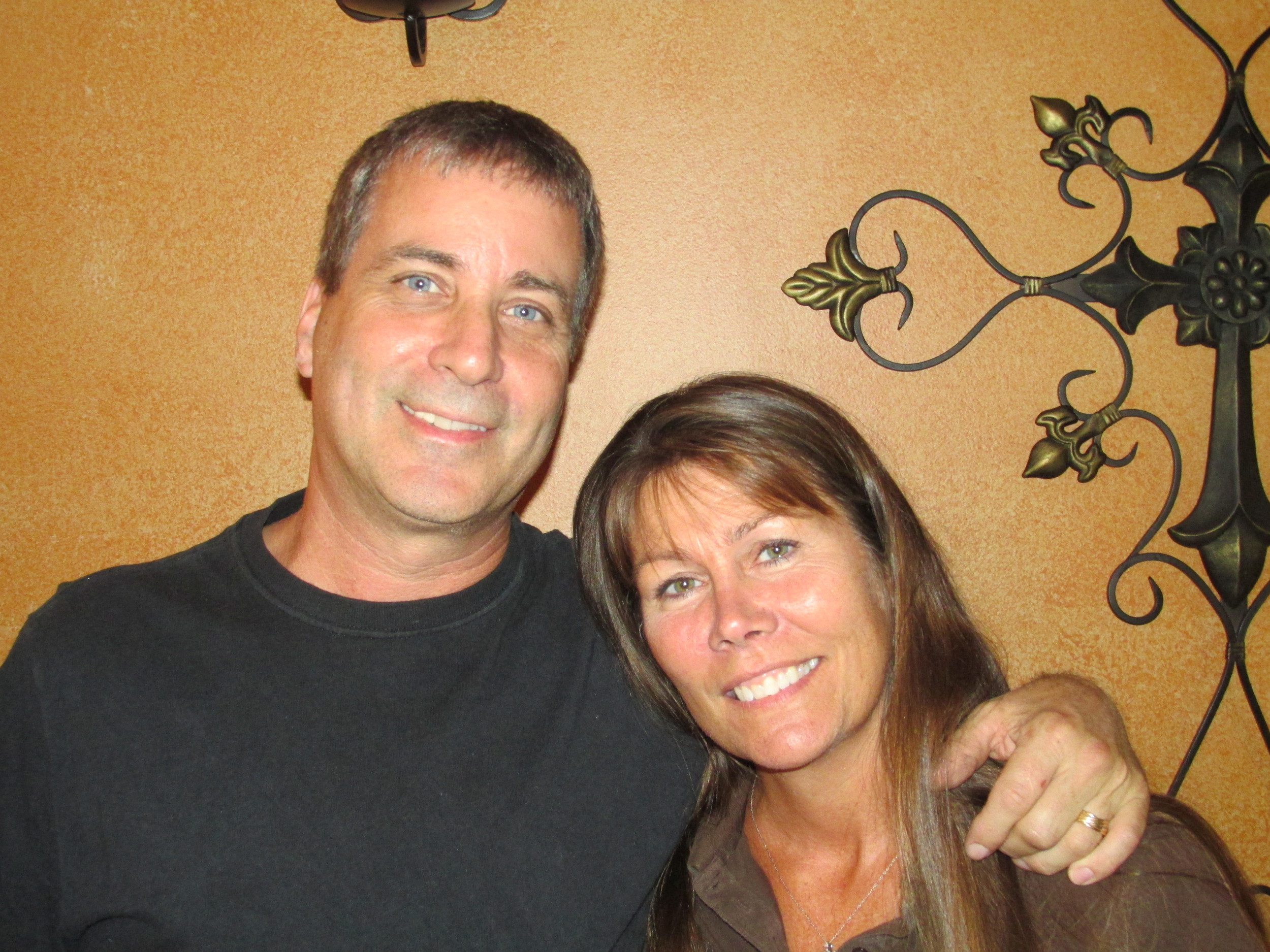
Lorri and Gary Formelio

Lorri and Gary Formelio

The cuts to the elderly in Martin County have been creeping up, food stamps here were cut prior to November.   Without reason, letters received in the mail were marked “ineligible.”  One senior lost only $16 a month.  But that small amount covered her milk, eggs, cheese and hamburger meat.   Now she gets by with much less—no milk, only one or two eggs per week, little cheese and she goes to a pantry for hamburger.  For evening meals, she attends a soup kitchen.  This senior had been receiving SNAP for the last year and a half.

JC’s Soup Kitchen operates out of First Baptist Church of Jensen Beach—begun four and a half years ago by a few couples including Gary and Lorri Formelio.

 They typically seat between 70 to 100 visitors each Tuesday evening.  Two cooks, one of them Gary, are in the kitchen weekly.  Rarely is soup on the menu, more often it’s a full meal, including vegetables and dessert.  Olive Garden is a regular donator of meals.  Lorri states that more restaurant food donations are needed.  Also, fresh produce is needed to hand out .

Lorri adds that this sector of society has many disabled and elderly; they are exhausted from life itself, and frankly, they don’t know what they will do because of the food stamp cuts.

JC's Soup Kitchen

JC's Soup Kitchen

Gary Formelio has the solution:  Every church in America must set aside a closet or a room for food pantry items to be distributed to those in need.  It should include canned goods, dry goods, toiletries, vitamins, baby needs and over the counter medications.  Those in need cannot afford these items.

If there is room, a deep freeze and fridge should be included for meat products, milk, eggs, cheese and fresh produce.

Churchgoers can contribute.  If the typical church is 70 members and each person brought even just one canned good, there would be 70 cans in the pantry.

Lorri Formelio knows that there is a stigma for those in need.  This affects their dignity.  When people come in to JC’s Soup Kitchen, she gives them a hug, she knows their names, and she genuinely listens to their needs.   Lorri, Gary and the many other soup kitchen workers across the country are the faces of hope.

HAVE A HERO TIP? Hometown Heroes are in every town and city. They are regular people who have made a positive difference in their community, impacting others for the better. Send your Hometown Hero tip to Kelly Jadon  kfjadon@gmail.com or find her online at kellyjadon.com.

HH: Tish DeTata--How To Overcome Fibromyalgia

In Jensen: A National Model For Feeding The Needy

   © 2013 "Hometown Heroes" Kelly Jadon

HH: Tish DeTata--How To Overcome Fibromyalgia

HHLOGOsmall.png


Trainer to the stars and the wealthy, Tish DeTata states that recovery from fibromyalgia is 70 percent nutrition and 30 percent exercise.

tish1.jpg

In 2005, at the age of 35, Tish DeTata was diagnosed with fibromyalgia. No one else in her family had ever had the disorder. Within one month she had gone from being an athlete to being bedridden due to full body weakness.

Tish DeTata is a trainer to the famous and the rich — a selection so exclusive that their names are taboo to the press. Each week, several of them meet her inside a private spa on the island of Palm Beach. Tish has worked passionately in this field for over 20 years.

Fibromyalgia is called a disorder by the Mayo Clinic, “characterized by widespread musculoskeletal pain accompanied by fatigue, sleep, memory and mood issues.” Those with the disorder call it painful.

Fibromyalgia affects more women than men, within ages 20-50. About one in 50 U.S. citizens has the disorder—in 2004, the American College of Rheumatology reported the number at between 3 and 6 million.

The disorder costs the U.S. economy approximately $20 billion yearly.

Fibromyalgia is without a cure. While many of those diagnosed with the disorder have become disabled and take medication, Tish DeTata has recovered and is not on medication. Her story is remarkable.

At the time of Tish’s diagnosis, she had 17 years of experience as a trainer, seven certifications, owned her own personal training studio and was working corporately with such companies as AT&T and UNIX.

For one month Tish was only able to crawl around. She also used her pool, which kept up her circulation and mobility. Each day as she floated in the water, Tish prayed, “Please God, just let me die.” The pain was excruciating. As an active person, the inability was disheartening.

Then one day, Tish realized that she wasn’t going to die. She set a goal for herself. “In four months, I want to be back in my studio.” She made it. That was a life-changing moment for her.

When asked how she recovered, Tish responds:

First, prayer is what kept me going. I tell people, “Pain is real—so is hope.” Prayer gives us hope.

Second, I slowed down my heavy load of teaching.

Third, I enrolled myself in the Hippocrates Health Institute for one week, where I learned more about taking care of myself nutritionally. I’d been to see other doctors—all they could offer me was medication. I said, “No” to that route.

Fourth, I began walking slowly. For anyone who is not an athlete, get a pair of sneakers and begin walking 10 minutes a day—then build up. Walking gets the blood circulating, and keeps the muscles and bones pliable.

Fifth, I began to eat cleaner than I ever had before. I avoid alcohol and eat little red meat. Most of my diet is fish, vegetables, raw nuts and limited grains. Juicing, especially green drinks is essential. Juicing significantly changed my health. If you smoke, stop. I also started on supplements. Personally, I like the raw whole food nutrition of Garden of Life products.

Sixth, I educated myself on fibromyalgia. Massage is beneficial. I have one two or three times monthly.

Since that first day back to work, I have not missed a day of work again. I made a commitment. My commitment in life has always been to help others physically. We need to fix our insides and stay healthy to survive.

Tish DeTata believes that recovery from fibromyalgia is 70 percent nutrition and 30 percent exercise. For many, a psychologist or counselor is helpful during this period of time, because most with the disorder are dealing with depression and anxiety.

The horrific pain Tish experienced has become 65% better following this plan. She still has some chronic pain, but it varies in degree.

Tish has learned that struggle and suffering have made her a stronger person. Today she is grateful to say, “I’m alive.” Without the trials of life, she believes that there is little appreciation for life’s blessings.

Tish DeTata is a fibromyalgia overcomer and a hero not just in her hometown of Port St.Lucie, but around the world.


HAVE A HERO TIP? Hometown Heroes are in every town and city. They are regular people who have made a positive difference in their community, impacting others for the better. Send your Hometown Hero tip to Kelly Jadon  kfjadon@gmail.com or find her online at kellyjadon.com.

Why Good News Matters In 2013

   © 2013 "Hometown Heroes" Kelly Jadon